
Key Takeaways
- Act quickly after carpet flooding to limit further damage
- Stop the water source before starting the cleanup
- Remove standing water using suitable extraction equipment
- Move furniture away from wet carpet as soon as possible
- Improve airflow with fans and ventilation
- Check carpet underlay because it can hold moisture for longer
- Avoid using excessive heat on wet carpet fibres
- Watch for mould, musty smells and visible carpet damage
- Consider professional carpet cleaning after significant water exposure
When a carpet becomes wet, it can turn a fairly clean carpet into a real nightmare. Water can carry moisture and odours into the fibres, while damp areas can attract dirt as they dry. It can also pass through the carpet into the backing, underlay and flooring beneath it. The proper cleaning technique depends on how much water entered the carpet and where it came from. For severe water damage, Carpet Cleaning Gold Coast may help restore affected areas and reduce lingering odours. In this blog, we will talk about how to clean carpet after water damage, how to dry wet carpet and how to prevent damage from carpet flooding.
Table of Contents
Identify The Water Damage Source
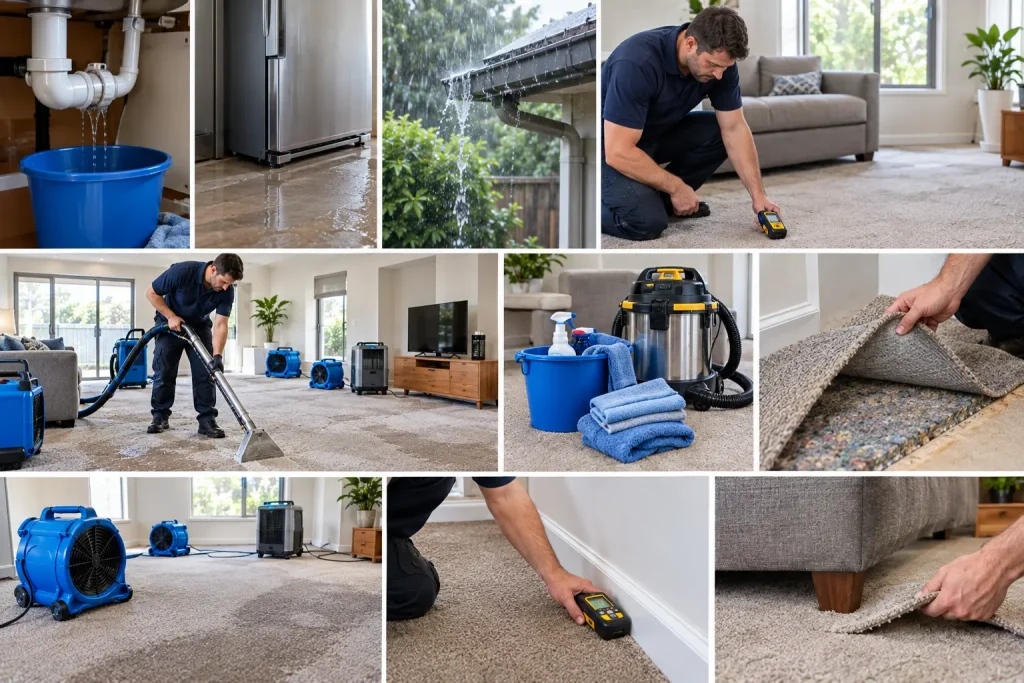
Locate the source of the water before you clean the carpet. A minor clean-water leak may call for a distinct plan of action than that for contaminated floodwater. Leaking pipe, overflowing appliances or storm water can all treat carpet differently. Once it is safe to do so, stop the water. Remove any electrical equipment from wet areas. Do not step into standing water that reaches the electrical outlets and appliances. Take note of the length of where the moisture has traveled on the carpet from the centre. Be sure to check around furniture, along room edges and up at nearby walls. Also lift the carpet pad if you can safely do so.
Common Water Damage Sources
| Water Source | Possible Carpet Issue |
| Burst pipe | Saturated carpet and underlay |
| Washing machine leak | Localised moisture and odours |
| Stormwater | Dirt, debris and contamination |
| Overflowing appliance | Wet fibres and padding |
| Bathroom overflow | Moisture and possible contamination |
Avoid water that appears dirty or contaminated if possible unless there’s no choice you could use professional water damage restoration.
Remove Standing Water Quickly
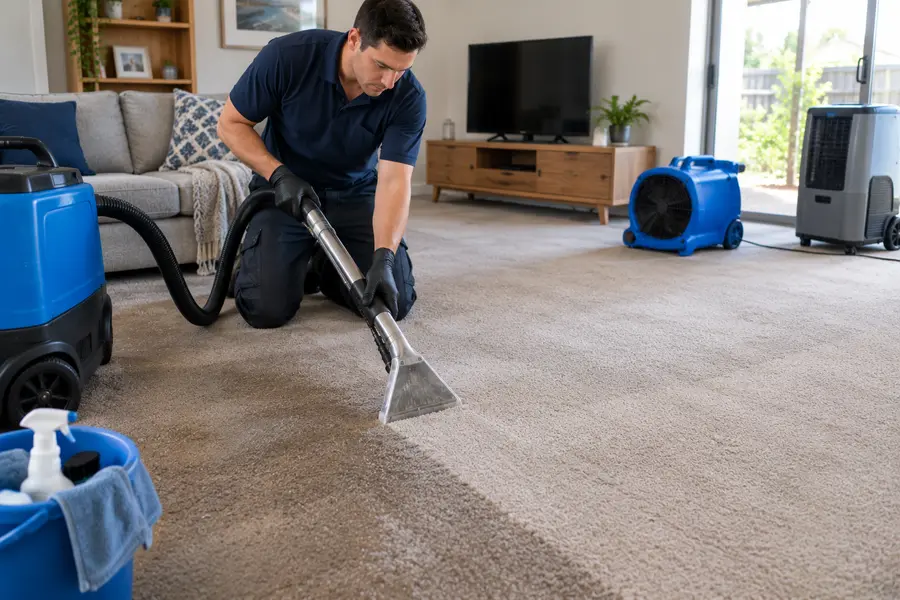
Easing against the effects of standing water should be your first concern. The longer the carpet stays wet, the more difficult it will be to dry it out properly. Remove as much moisture from the carpet as you can using a shop vacuum or, ideally, a carpet extractor. Methodically work slowly and methodically across the wet area. Repeat passes until the carpet’s moisture is at a comfortable level. If at all feasible, move furniture away from the wet carpet. If the furniture has to remain in close proximity, place protective material beneath the furniture legs. This reduces the risk of moisture being drawn into and leaving stains.
Dry Carpet With Better Airflow
Once the water is out concentrate on drying the carpet. Proper drying can be enhanced by good air circulation. When the weather’s right, bring in the air through your windows and doors. Place fans in the proximity of the carpeted room so the air is circulated over the carpet. Don’t direct strong air flow to the same tiny area repeatedly. See if you can find any signs of dampness in that carpet? By the time that steam has dried, the carpet may appear and feel dry to the touch but in fact, is still wet. Do not rely on touch alone. Moisture may also become trapped in the underlay or under furniture.
Clean Wet Carpet Carefully
After cleaning, inspect the carpet carefully to check for stains or other damage. Water can flow across the carpet surface, carrying dirt and debris with it. This can also affect the carpet fibres. Use a suitable carpet cleaning chemical for your carpet type and always follow the product instructions. Do not vigorously scrub wet carpet, as over-rubbing can fray fibres and change their appearance. If the carpet has been exposed to dirty floodwater, homes in Gold Coast may require professional carpet cleaning because contaminated water can carry bacteria and unpleasant odours.
Check The Carpet Underlay
The carpet can feel dry while the underlay stays damp. That’s why I said that looking under the carpet yourself after a major water intrusion can be so important. Underlay can retain moisture and become waterlogged. Moisture trapped under the floor can cause lingering odours and more. When the underlay has been soaked through and through it is pretty hard to dry it out. In some cases, it’s just easier to replace. If the flooding has been more serious then always contact a commercial carpet cleaner or water damage remediation company. They will inspect the carpet and can check the layering and the floor underneath.
Carpet Damage Assessment
| What To Check | Signs Of A Problem |
| Carpet fibres | Flattening, staining or unusual texture |
| Underlay | Persistent dampness or odour |
| Flooring | Swelling or visible moisture |
| Carpet edges | Lifting or movement |
| Room air | Musty or damp smell |
Prevent Mould And Odours
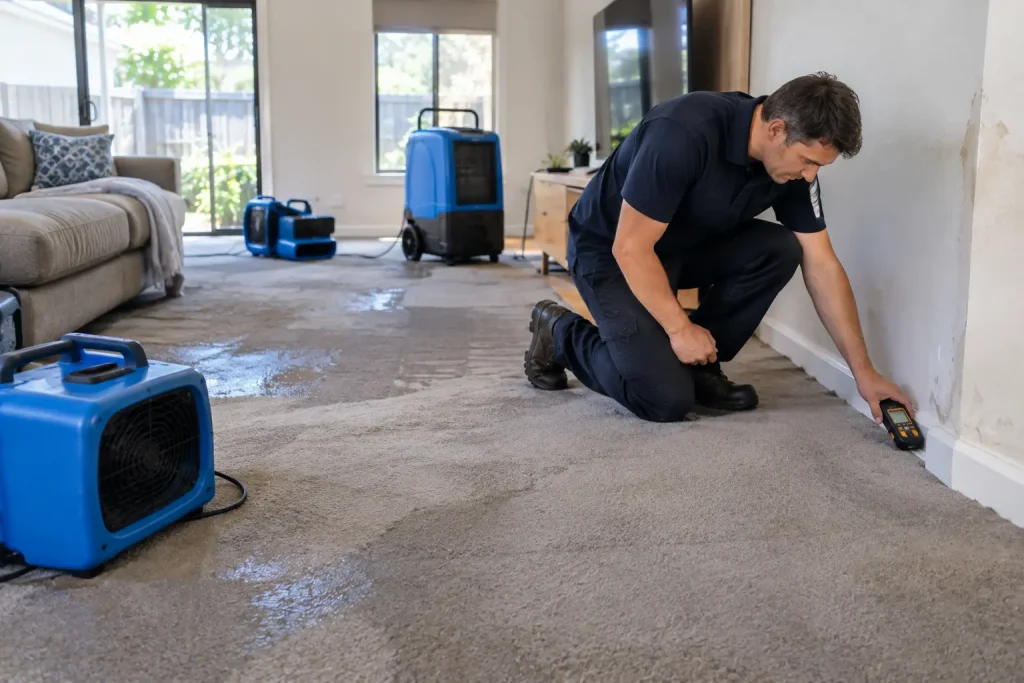
Requirement of moisture monitoring following water intrusion. You may detect a moldy odour if your carpet remains wet for a length of time. Ventilate until carpet and subfloor are dry. Be patient, don’t try to hurry through taping off the room. Check over the corners, along the edges of the carpet and the bottom of the furniture. The problem might be best dealt with by professionals with extensive contaminated areas. If the carpet is still soggy after the drying treatments, the answer may be the use of specialized equipment.
Know When Professional Cleaning Helps
Cleaning may need to be carried out by professionals if the carpet is damaged to a high degree. Commercial extraction machines will remove a greater amount of water from carpets than many domestic approaches. It may be beneficial to have the carpet fibres tested to determine if further treatment is necessary. When to call in professional help when the water has reached the underlay. It may also be necessary if the affected area is too large or inaccessible for treatment. The water source, the condition of the carpet, the length of exposure time and the condition of the underlay, all influence the result.
Avoid Common Water Damage Mistakes
The wet carpet problem is caused by a number of factors. One of the popular mistakes is to wait too long to remove the standing water. Another error is to use too much water while cleaning. More water wet carpet is already wet so any additional application of water will only extend the drying time. Never use a household vacuum cleaner for water removal. Certain treatments may result in colour fading or fibre damage. Don’t just hide it under the underlay. It can be damp even when the carpet feels dry. Finally, don’t replace furniture right away. Just let the carpet and the adja-cent building materials dry out completely.
Conclusion
After your carpet has been exposed to water, act quickly to begin the drying process. First, find the source of the water and remove it safely before starting the cleanup. Use appropriate extraction equipment to remove moisture from the carpet, pad and subfloor, and avoid using too much detergent because excess product can leave residue. Following a weekly cleaning schedule for a clean and spotless home can also help maintain your carpet and prevent dirt from building up between deeper cleaning sessions. With proper cleaning and drying, some water-affected carpets can be successfully restored.
Frequently Asked Questions
1.Can flooded carpet be cleaned?
Yes, some water-damaged carpet can be cleaned if it is treated and dried promptly.
2. How do you dry carpet after flooding?
Remove excess water first. Then use fans, ventilation and suitable dehumidification to improve drying.
3. Can carpet underlay be dried?
It can sometimes be dried but heavily saturated underlay may require professional assessment or replacement.
4. When should I replace flooded carpet?
Replacement may be necessary when carpet remains damaged, contaminated, persistently damp or affected by serious mould.